
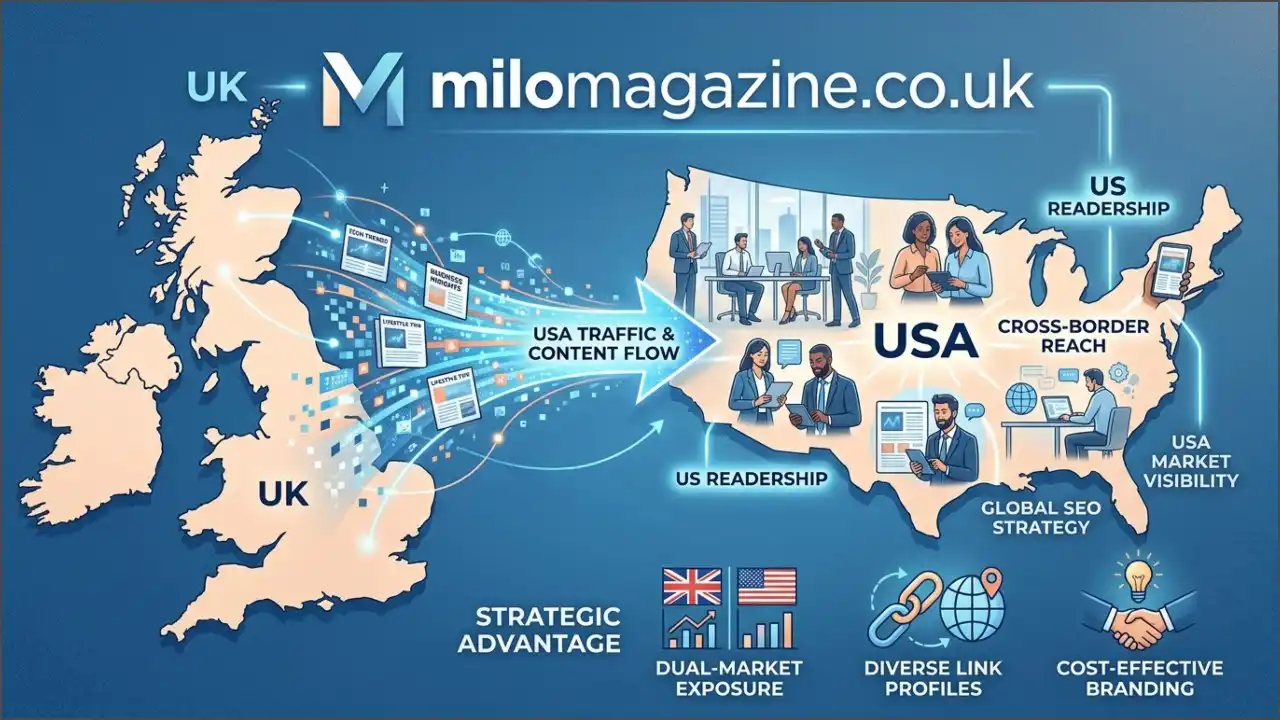
Top-tier marketing teams often hit an unexpected obstacle when scaling international SEO campaigns: evaluating domain extensions against actual audience reach. A frequent question arises when analyzing backlink prospects or content syndication networks: why would a US-focused business publish content on a British domain like milomagazine.co.uk usa?
The initial assumption is that a .co.uk top-level domain locks a website strictly to the United Kingdom. However, modern search engine algorithms and global traffic patterns show a different reality. Digital publications frequently build massive cross-border audiences, making domain extensions less restrictive than they appear on paper.
Understanding how multi-niche sites operate across borders helps SEO strategists, content creators, and business owners decide whether cross-territory publishing fits their growth plans.
What Is milomagazine.co.uk and How Does It Handle US Traffic?
At its core, milomagazine.co.uk is a multi-topic digital publication covering technology, business trends, lifestyle, home improvement, and digital marketing. While the domain suffix points to Great Britain, its distribution and readership extend into the United States.
Search engines evaluate sites based on content context, hosting infrastructure, user engagement, and inbound link profiles—not just country-code top-level domains (ccTLDs). When a platform consistently produces content that resonates with American readers, search engines index and rank those pages within US search results.
For US marketers evaluating milomagazine.co.uk usa opportunities, the platform serves as an international distribution channel capable of reaching readers on both sides of the Atlantic.
The Strategic Value of Cross-Territory Publishing
Publishing on a UK-based platform while targeting an American audience offers distinct advantages that traditional single-region sites miss.
1. Dual-Market Exposure
Content placed on international platforms captures search volume from both North America and Europe. An article on cloud computing or remote work policies published on a cross-border site ranks for query variations across multiple geographic regions without requiring separate domain assets.
2. Diverse Link Profiles
Search engines favor websites with natural, varied backlink profiles. Acquiring links from reputable international domains signals to algorithms that your brand carries global relevance rather than narrow local interest.
3. Cost-Effective Brand Visibility
Securing featured placement on major US-native publications often requires heavy editorial budgets or extensive agency retainers. International multi-niche magazines offer accessible entry points for guest contributors while maintaining solid domain authority metrics.
Key Metrics to Evaluate Before Submitting Content
Not every digital magazine delivers equal value. Before submitting articles or sponsored placements to platforms associated with milomagazine.co.uk usa, run a standard diagnostic check:
-
Organic Traffic Share: Target a minimum of 30% US traffic to confirm genuine visibility in the target region.
-
Domain Authority / Rating: Aim for DA/DR 30+ to ensure link equity transfers effectively.
-
Indexing Speed: Articles should be indexed within 24–48 hours as a signal of search engine trust and regular crawling.
-
Editorial Guidelines: Look for clear quality rules to prevent your content from sitting next to low-quality posts.
A site worth your time maintains strict editorial control. If a publication accepts poorly written, spun content without review, back away—linking from low-quality farms damages your own site’s search standing over time.
Common Pitfalls in Cross-Border Digital Marketing
Working across international borders introduces specific errors that can undermine an otherwise solid SEO campaign.
-
Ignoring Regional Spelling and Tone: If your main target is the US, stick to American English conventions (e.g., “optimize” instead of “optimise”, “color” instead of “colour”). Mismatched spelling confuses readers and dilutes regional search relevance.
-
Forcing Irrelevant Backlinks: Inserting a link to a local US plumbing service inside a generic UK tech article looks artificial. Ensure the link context directly answers a problem raised in the body text.
-
Over-Optimizing Anchor Text: Using exact-match commercial keywords as anchor text creates toxic link footprints. Rely instead on branded anchors, partial matches, or natural phrase structures.
Step-by-Step: Crafting Content for a US Readership on International Platforms
To get the best return from platforms tied to milomagazine.co.uk usa, follow a structured publication workflow:
Step 1: Identify Broad, Cross-Border Topics
Focus on subjects that transcend local geography. Software reviews, digital marketing strategies, personal finance basics, and wellness advice apply equally to readers in New York or London.
Step 2: Adapt Tone for the Target Audience
If the goal is capturing American search traffic, frame examples around US market standards, dollar figures ($), and relevant regulatory bodies (like the FTC or SEC where applicable).
Step 3: Implement Proper Rel Attributes
When placing sponsored or partner content on external magazines, ensure outgoing links use appropriate attributes like rel="sponsored" or rel="nofollow" where required by search guidelines. Proper tagging protects both your site and the publisher from algorithm penalties.
Step 4: Monitor Indexation and Performance
Track published URLs using rank trackers set specifically to US Google data centers. This confirms whether search engines serve the page to your intended audience.
Practical Checklist for Publishing
Before finalizing any submission for milomagazine.co.uk usa campaigns, run through this quick checklist:
-
[ ] Does the topic address a specific problem for US readers?
-
[ ] Is the grammar and spelling consistent with the target market?
-
[ ] Are outbound links relevant, natural, and helpful to the reader?
-
[ ] Does the article avoid fluff and supply practical, actionable advice?
-
[ ] Is the publisher indexing new pages consistently in Google?
Conclusion
Building an international search presence requires looking beyond simple domain extensions. While .co.uk domains originate in Britain, platforms like milomagazine.co.uk operate in a global digital ecosystem where quality content attracts readers regardless of geography. By understanding how cross-border indexing works, applying rigorous editorial standards, and focusing on user intent, US brands can turn international digital magazines into reliable drivers of search authority and brand awareness.